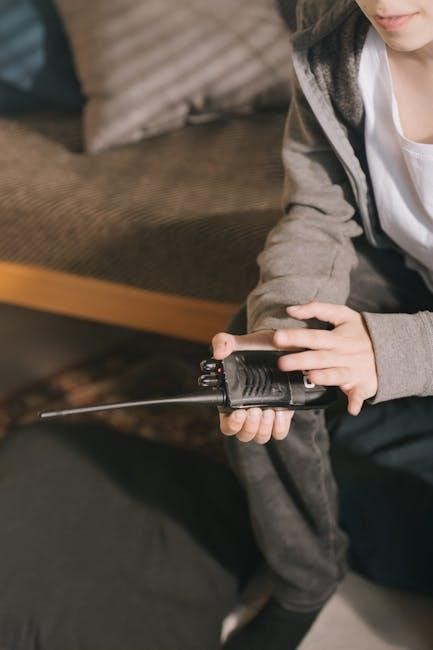
Baofeng radios offer incredible communication capabilities with minimal training, being inexpensive, simple-to-use VHF/UHF FM analog radios. This guide unlocks their potential!
This manual aims to maximize your radio’s performance, delivering secure, instant, and reliable communications at peak efficiency through careful operation.
What is a Baofeng Radio?
Baofeng radios are remarkably accessible two-way communication devices, gaining immense popularity due to their affordability and ease of use. Essentially, a Baofeng is a handheld, low-power analog radio operating on Very High Frequency (VHF) and Ultra High Frequency (UHF) bands, utilizing Frequency Modulation (FM).
These radios aren’t limited to amateur radio enthusiasts; they find applications in various fields like security, event coordination, and recreational activities. They are dual-band/dual-display radios designed for secure, instant, and reliable communication. Despite their low cost, Baofeng radios offer a surprising range of features and capabilities, making them a versatile tool for anyone needing portable communication.
Understanding the basics is key to unlocking their full potential.
Why Choose a Baofeng Radio? (Cost & Simplicity)
The primary appeal of Baofeng radios lies in their exceptional value. Compared to other two-way radios, Baofeng models are significantly more affordable, making them accessible to a wider range of users. This low price point doesn’t equate to compromised quality; they deliver reliable performance for everyday communication needs.
Beyond cost, Baofeng radios are renowned for their simplicity. Minimal training is required to operate them effectively, thanks to an intuitive interface and straightforward controls. This ease of use is particularly beneficial for beginners or those needing a quick communication solution. They deliver peak efficiency with minimal effort, making them a practical choice.
It’s a powerful communication tool, easily mastered.
Common Baofeng Radio Models (UV-5R, UV-82HP, etc.)
Baofeng offers a diverse range of radio models, catering to various needs and preferences. The UV-5R is arguably the most popular, known for its versatility and affordability, serving as an excellent entry point for newcomers. The UV-82HP is another frequently chosen model, often favored for its extended range and robust build quality.
Other notable models include the BF-F8HP, offering improved performance over the UV-5R, and the UV-10R, a compact and lightweight option ideal for portability. Each model supports both VHF and UHF frequencies, providing broad communication capabilities. Understanding the specific features of each model is crucial when selecting the best fit for your requirements.
Choosing wisely ensures optimal performance and satisfaction.

Understanding Baofeng Radio Basics
Baofeng radios utilize VHF/UHF frequencies and Frequency Modulation (FM) for analog communication, employing channels, tones, and adjustable power levels for operation.
VHF vs. UHF Frequencies
VHF (Very High Frequency), ranging from 136-174 MHz, excels in open areas with less obstruction, offering greater range and penetration through foliage. Think rural landscapes and clear line-of-sight scenarios. However, VHF signals struggle penetrating buildings effectively.
UHF (Ultra High Frequency), spanning 400-520 MHz, is ideal for urban environments and indoor use. Its shorter wavelengths navigate buildings and obstacles more readily, though its range is generally less than VHF in open spaces.
Baofeng radios are often dual-band, supporting both VHF and UHF. Selecting the appropriate frequency depends on your operating environment and communication needs. Understanding these differences is crucial for maximizing signal strength and range, ensuring reliable communication in diverse situations.
Frequency Modulation (FM) Explained
Frequency Modulation (FM) is the method Baofeng radios use to transmit voice and data. Unlike Amplitude Modulation (AM), FM varies the frequency of the carrier wave to represent the audio signal, keeping the amplitude constant. This results in a clearer, less noise-prone signal, especially beneficial for voice communication.
FM’s resistance to interference makes it ideal for short-range, two-way radio communication. The wider bandwidth of FM allows for higher audio fidelity. Baofeng radios operate on FM, providing relatively clear audio even in challenging environments.
Understanding FM helps appreciate why these radios perform well in noisy conditions, delivering reliable communication when it matters most.
Key Radio Terminology (Channels, Tones, Power Levels)
Understanding core terminology is crucial for Baofeng radio operation. Channels are specific frequencies you tune into for communication. CTCSS/DCS tones (also known as privacy codes) filter out unwanted transmissions on shared frequencies, allowing you to hear only relevant conversations. They don’t provide true security, but reduce interference.
Power Levels (Low, Medium, High) determine the radio’s transmission range and battery consumption. Lower power saves battery but limits range; higher power increases range but drains the battery faster. Proper tone and power level settings are vital for effective communication.
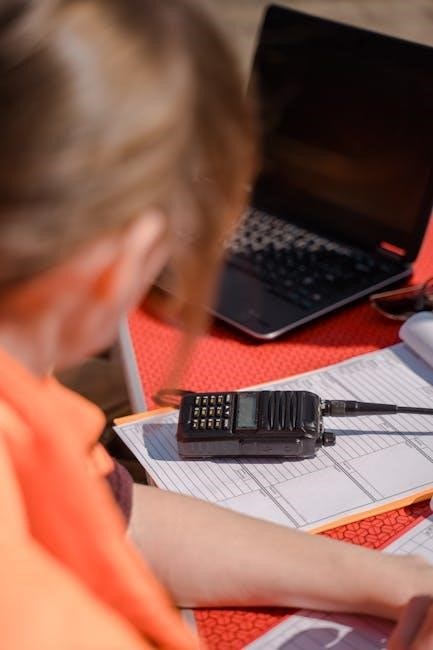
Mastering these terms unlocks the full potential of your radio, enabling clear and efficient communication.

Essential Accessories
Baofeng radios benefit greatly from accessories like USB programming cables, enhanced antennas for extended range, and reliable batteries with chargers for continuous operation.
Programming Cables (USB)
USB programming cables are crucial for efficiently configuring your Baofeng radio. These cables connect your radio to a computer, enabling software like CHIRP to upload and download channel configurations, eliminating tedious manual entry.
Typically, these cables feature a specific connector that plugs into your radio, and a standard USB connector for your computer. Ensure you purchase a cable compatible with your specific Baofeng model (UV-5R, UV-82HP, etc.).
Using a programming cable significantly speeds up the process of setting frequencies, names, and advanced features, making it an indispensable tool for serious radio users. They are inexpensive and readily available online.
Antennas (Improving Range & Signal)
Antennas play a vital role in maximizing your Baofeng radio’s performance, directly impacting both range and signal strength. The stock antenna included with most Baofeng radios is often a compromise, limiting potential communication distance.
Upgrading to a higher-gain antenna can dramatically improve your radio’s reach, especially in challenging environments. Different antenna types – such as longer whips, or directional antennas – suit various needs. Consider the frequency you’re using (VHF or UHF) when selecting an antenna.
Proper antenna installation and matching are crucial for optimal performance. A poorly matched antenna can actually reduce signal strength. Experiment to find what works best for your location and communication goals.
Batteries & Chargers
Baofeng radios typically utilize Lithium-ion (Li-ion) batteries, offering a good balance of energy density and weight. Battery life is a critical factor, especially during extended operations or emergencies. Understanding battery care is essential for longevity and reliable performance.
Original Baofeng chargers are recommended to ensure proper charging voltage and prevent damage to the battery. Avoid using generic or low-quality chargers, as they can potentially shorten battery life or even pose a safety hazard.
Consider investing in spare batteries to extend your operational time. Properly storing batteries when not in use – partially charged and in a cool, dry place – will maximize their lifespan.
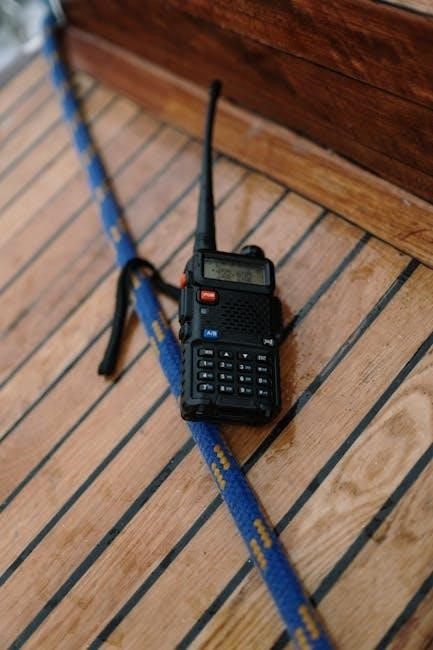
Finding the Baofeng Radio PDF Manual
Locating the correct PDF manual is crucial for understanding your Baofeng radio’s features and programming. Resources include the official website and third-party archives.
Official Baofeng Website Resources
Navigating the official Baofeng website can be challenging, as resources aren’t always readily apparent or consistently organized. However, it remains the primary source for manufacturer-provided documentation. Begin by identifying your specific radio model – UV-5R, UV-82HP, or another variant – as manuals are model-specific.
Look for a “Support” or “Downloads” section on the Baofeng website. Within these areas, you may find a list of available manuals in PDF format. Be prepared to potentially sift through multiple pages or search using keywords related to your radio model. Often, the manuals are presented as compressed ZIP files, requiring extraction before viewing.
Keep in mind that the official Baofeng website may not always have the most user-friendly interface or the most comprehensive collection of manuals. It’s often beneficial to supplement your search with third-party resources, as detailed in the following sections.
Third-Party Manual Archives & Websites
Fortunately, numerous websites and online archives specialize in collecting and sharing user manuals for various devices, including Baofeng radios. These resources often provide a more organized and accessible collection than the official Baofeng website. Several dedicated communities have compiled extensive libraries of Baofeng manuals in PDF format.
Explore sites like ManualsLib, and various amateur radio forums and wikis. These platforms frequently host user-uploaded manuals and guides, offering a wider range of options. When searching, be precise with your radio model number to ensure you download the correct manual.
Always exercise caution when downloading files from third-party sources, verifying the file’s integrity and scanning for potential malware before opening. These sites can be invaluable for finding manuals not available elsewhere.
Identifying the Correct Manual for Your Model
Crucially, Baofeng produces numerous radio models, each with a specific manual tailored to its features and functions. Using the wrong manual can lead to incorrect settings and operational issues. Always locate the manual specifically designed for your exact radio model number.
Check the label on the back of your radio or the original packaging to find the precise model identifier (e.g., UV-5R, UV-82HP). Compare this identifier against the manual’s title or description before downloading or using it.
Pay attention to variations within models (like the UV-5R vs. UV-5RA). Subtle differences can necessitate a different manual. If unsure, consult online forums or communities for clarification.

Manual Programming of Your Baofeng Radio
Accessing the menu system allows direct configuration of channel information, including frequency and name, alongside crucial settings like CTCSS/DCS tones for clear communication.
Accessing the Menu System
To enter the programming menu on your Baofeng radio, press and hold the “MENU” button. Navigate through the options using the up and down arrow keys. The menu structure can seem daunting initially, but understanding its organization is key to successful programming.
Each menu item is represented by a number and a brief description. Press the “MENU” button again to select the highlighted option. Use the arrow keys to adjust the settings within each menu. Remember to save your changes by exiting the menu – typically by pressing “MENU” repeatedly until you return to the main operating screen.
Familiarize yourself with the menu flow; practice accessing different settings to build confidence. A detailed understanding of the menu system is fundamental for manual programming and customizing your radio’s functionality.
Setting Basic Channel Information (Frequency, Name)
Once inside a channel’s settings, you can adjust the frequency directly. Use the arrow keys to modify the digits, ensuring you input the correct value for your desired channel. After setting the frequency, you can assign a name to the channel for easy identification. This is particularly useful when programming multiple frequencies.
The naming convention is limited by character length, so choose concise and descriptive names. Saving the channel with a relevant name will significantly improve usability. Remember to confirm each setting before exiting; incorrect frequencies or names can lead to communication issues.
Proper channel naming and frequency input are crucial for reliable operation. Double-check your work before moving on to the next channel, ensuring accuracy and clarity.
Configuring CTCSS/DCS Tones
CTCSS (Continuous Tone-Coded Squelch System) and DCS (Digital Coded Squelch) tones are essential for filtering out unwanted transmissions on shared frequencies. Access the tone settings within each channel’s menu. You’ll typically find options for both CTCSS and DCS, allowing you to select the appropriate coding system.
Input the correct tone frequency or code for the group you wish to communicate with. Incorrect tone settings will prevent you from hearing their transmissions, and vice versa. Scanning for CTCSS & DCS tones helps identify active frequencies and their associated codes.
Ensure the tone type (CTCSS or DCS) matches the group’s configuration. Proper tone configuration significantly reduces interference and enhances privacy on busy channels.

Computer Programming with CHIRP
CHIRP software simplifies Baofeng radio programming for Windows, Linux, and macOS. Connect your radio via USB cable to download and upload configurations easily.
Installing CHIRP Software (Windows, Linux, macOS)
CHIRP, a crucial tool for Baofeng radio programming, is freely available for multiple operating systems. For Windows users, download the installer from the official CHIRP website and follow the on-screen instructions. Linux distributions often have CHIRP available through their package managers – use your distribution’s preferred method to install it.
macOS users can download the DMG file from the website; simply double-click to mount and then drag the CHIRP application to your Applications folder. Ensure you download the latest version for optimal compatibility and bug fixes. During installation, pay attention to any driver prompts, especially on Windows, as a compatible USB driver is essential for radio communication. A successful installation will provide a user-friendly interface for managing your radio’s settings.
Connecting Your Radio to Your Computer
Establishing a connection between your Baofeng radio and computer requires a specific programming cable – typically a USB cable with a proprietary connector. Power off your radio before connecting the cable. Insert the cable into the designated port on your radio and the USB port on your computer.
Your computer should detect the connection, potentially installing necessary drivers automatically. If not, you may need to manually install the drivers, often available online or included with the cable. Once connected, open the CHIRP software. Select the correct COM port your radio is assigned to within CHIRP’s settings. Choose “Baofeng” as the vendor and your specific model (e.g., UV-5R) to ensure proper communication.
Downloading and Uploading Configuration Data
With your Baofeng radio connected and CHIRP software configured, you can now download the existing configuration data. Initiate the “Download” process within CHIRP. This retrieves all channel information, settings, and frequencies currently stored on your radio.
Review the downloaded data carefully within CHIRP to understand the current setup. Make desired changes – adding, deleting, or modifying channels and settings. To upload the modified configuration back to your radio, initiate the “Upload” process. CHIRP will transmit the new data, overwriting the previous settings. Ensure the radio remains powered on and connected throughout the upload process to prevent errors.

Advanced Programming Techniques
Baofeng radios support cloning, channel grouping, and offset frequencies for enhanced functionality and customization. Explore these features within CHIRP for optimal performance!
Cloning Radios
Cloning allows you to quickly duplicate the programming from one Baofeng radio to another, saving significant time and effort. This is particularly useful when configuring multiple radios with identical settings for a team or group. The process involves designating one radio as the “master” containing the desired configuration, and the other as the “clone”.
Using a compatible programming cable and CHIRP software, you can read the configuration data from the master radio and then write it to the clone. Ensure both radios are compatible before attempting to clone. Carefully verify the cloning process to avoid errors. This feature streamlines deployment and ensures consistent communication parameters across all devices.
Remember to double-check frequencies and tones after cloning to confirm accuracy.
Setting Up Channel Groups
Channel groups organize your frequently used channels into logical sets, simplifying navigation and improving operational efficiency. Instead of scrolling through all available channels, you can quickly access pre-defined groups tailored to specific activities or locations. This is especially valuable in dynamic environments where rapid channel switching is crucial.
Using CHIRP software, you can create custom channel groups and assign channels to them. These groups can be named descriptively – for example, “Emergency,” “Patrol,” or “Base Station.” The software allows for easy drag-and-drop assignment of channels.
Properly configured channel groups enhance usability and reduce the risk of selecting the wrong frequency during critical communications.
Utilizing Offset Frequencies
Offset frequencies are essential for establishing reliable communication on repeater systems. Repeaters receive a signal on one frequency and re-transmit it on another, extending the range of your radio. To access a repeater, your radio must be programmed with the correct transmit and receive offset.
The offset is the difference between the repeater’s receive frequency and its transmit frequency. This prevents interference between incoming and outgoing signals. CHIRP software simplifies offset programming; you input the repeater’s frequency and the appropriate offset (positive or negative).
Incorrect offset settings will result in either transmitting on the repeater’s receive frequency (causing interference) or failing to reach the repeater altogether. Accurate offset programming is vital for successful repeater access.