Avapow Jump Starter Manual: A Comprehensive Guide
This manual provides detailed instructions for Avapow jump starters‚ covering charging‚ usage‚ safety‚ and maintenance. It ensures optimal performance and longevity of your device‚ offering peace of mind.
Avapow jump starters are designed to provide a reliable and portable power source for jump-starting vehicles with dead batteries. These devices offer a convenient alternative to traditional jump-starting methods‚ eliminating the need for another vehicle or assistance from roadside services. Avapow prioritizes safety and ease of use‚ incorporating features like spark-proof technology and intuitive LED indicators.
Whether you’re facing a dead battery in a remote location or simply prefer the independence of self-reliance‚ an Avapow jump starter is a valuable tool. Beyond jump-starting‚ many Avapow models‚ like the T8 Max‚ boast multi-functionality‚ including USB charging ports for mobile devices and a built-in LED flashlight for emergency situations. This manual will guide you through the proper operation and maintenance of your Avapow jump starter‚ ensuring years of dependable service.
Understanding the Avapow A68 Model
The Avapow A68 is a robust and compact car battery jump starter‚ engineered for dependable performance. It’s designed to jump-start vehicles with up to 8.0L gasoline or 6.8L diesel engines. This model features a high discharge rate‚ delivering substantial starting power in a portable package. Key components include heavy-duty clamps and cables for secure connections‚ and a built-in LED flashlight for enhanced visibility during nighttime emergencies.
The A68 prioritizes user-friendliness with its simple interface and clear indicator lights. Regular charging‚ ideally every three months‚ is recommended to maintain optimal readiness. Proper storage in a cool‚ dry place‚ away from direct sunlight‚ will extend the lifespan of the device. Maintaining cleanliness and avoiding exposure to liquids are also crucial for long-term reliability.
Understanding the Avapow T8 Max Model
The Avapow T8 Max is a multi-functional portable car jump starter boasting a powerful 6000A peak current. It’s capable of jump-starting vehicles with up to 10.0L gasoline or 8.0L diesel engines‚ making it suitable for a wider range of vehicles. Beyond jump-starting‚ the T8 Max offers versatile functionality‚ including USB charging ports for mobile devices and other electronics.
This model distinguishes itself with its advanced features and robust construction. Like the A68‚ regular charging (every 3 months) and proper storage in a cool‚ dry environment are essential. The T8 Max’s multi-functionality demands careful handling to prevent damage. Keeping the device clean and dry is paramount for optimal performance and longevity‚ ensuring it remains a reliable emergency tool.

Safety Precautions
Prioritize safety when using your Avapow jump starter; understand potential hazards like battery acid and clamp handling for a secure and effective jump-starting experience.
General Safety Guidelines
Always inspect the Avapow jump starter for any visible damage before each use‚ ensuring the casing and clamps are intact. Never attempt to jump-start a damaged battery‚ as it could explode. Wear appropriate eye protection‚ such as safety glasses‚ to shield against potential sparks or acid splashes.
Ensure the jump starter is fully charged before attempting to use it. Avoid short-circuiting the clamps by ensuring they do not touch each other or any metal object while connected to the vehicle. Work in a well-ventilated area‚ as batteries can release flammable gases.
Keep children and unauthorized personnel away from the jump-starting process. Disconnect the jump starter immediately if any unusual noises‚ sparks‚ or smoke are observed. Refer to your vehicle’s owner’s manual for specific jump-starting instructions and precautions related to your car model.
Battery Acid Safety
Battery acid is a corrosive substance and requires careful handling. If battery acid comes into contact with skin‚ immediately flush the affected area with copious amounts of water for at least 15 minutes and seek medical attention. For eye contact‚ rinse immediately with water for 20 minutes and consult a physician urgently.
Avoid wearing clothing that could absorb acid‚ and always wear protective gloves and eye protection during jump-starting procedures. If acid spills‚ neutralize it with baking soda before cleaning up. Do not use water alone‚ as it can spread the acid.
Dispose of damaged batteries responsibly‚ following local regulations for hazardous waste disposal. Never attempt to repair a leaking or damaged battery yourself. Keep a supply of baking soda and water nearby in case of accidental spills‚ ensuring a swift and safe response.
Proper Handling of Clamps
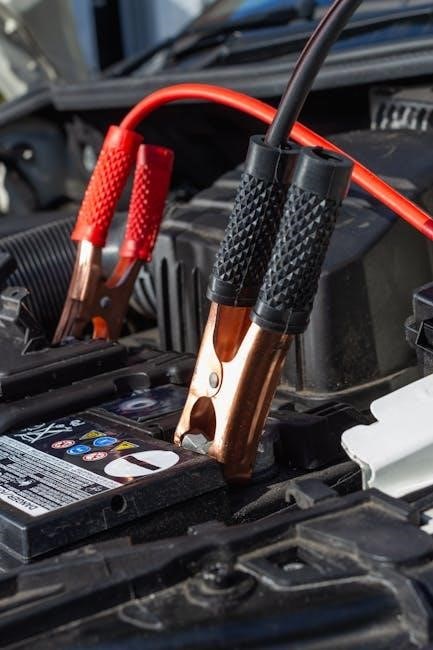
Always handle the jump starter clamps with extreme care to avoid accidental short circuits. Ensure the clamps are clean and free from corrosion for optimal contact. Never allow the clamps to touch each other while connected to a power source or vehicle battery.
When connecting‚ firmly attach the positive (red) clamp to the positive terminal of the dead battery‚ and the negative (black) clamp to a grounded metal surface on the vehicle – away from the battery. Avoid connecting the negative clamp directly to the negative terminal to minimize spark risk.
After jump-starting‚ disconnect the clamps in reverse order: negative first‚ then positive. Inspect the clamps regularly for damage and replace them if necessary. Store the clamps securely to prevent accidental contact and potential hazards.
Charging Your Avapow Jump Starter
Maintaining a charged jump starter is crucial for reliability. Regular charging‚ ideally every three months‚ ensures it’s ready when you need it most for quick starts.
Initial Charging Procedure
Upon receiving your Avapow jump starter‚ a full initial charge is essential before first use. Connect the provided charging cable to the jump starter’s charging port and a standard power outlet. Observe the charging indicator lights – typically‚ a red light signifies charging in progress.
Allow the unit to charge completely‚ indicated by a green light or a change in the indicator pattern‚ as detailed in the ‘Charging Indicator Lights Explained’ section. This initial charge may take several hours‚ potentially up to 8-12 hours depending on the model and current battery level.
Do not interrupt the charging process during this initial cycle. A complete charge ensures optimal performance and accurately assesses the jump starter’s capacity. Following this initial charge‚ adhere to the recommended regular charging schedule to maintain peak readiness.
Regular Charging Schedule (Every 3 Months)
To guarantee your Avapow jump starter is always prepared for emergency use‚ a regular charging schedule is crucial. Even when not actively used‚ the internal battery will self-discharge over time. We recommend charging the unit at least every three months to maintain optimal performance and extend its lifespan.
Connect the provided charging cable to the jump starter and a standard power outlet. Monitor the charging indicator lights to confirm the charging process has initiated. A full charge typically takes several hours‚ but checking the indicator lights will confirm completion.
Consistent adherence to this schedule prevents deep discharge‚ which can potentially reduce the battery’s overall capacity. Proper maintenance‚ including regular charging‚ ensures your Avapow jump starter remains a reliable source of power when you need it most.
Charging Indicator Lights Explained
Understanding the charging indicator lights on your Avapow jump starter is essential for monitoring its power status. Typically‚ a red light indicates the unit is currently charging and receiving power from the outlet. This light remains illuminated throughout the charging process.
Once the jump starter reaches full capacity‚ the indicator light will usually change to green. A solid green light signifies a complete charge and readiness for use. Some models may feature a flashing green light to indicate a standby or maintenance charging mode.
If the indicator light doesn’t illuminate at all when connected to power‚ check the cable connection and the outlet. Refer to the troubleshooting section if the issue persists. Always ensure a secure connection for efficient charging and accurate indicator readings.
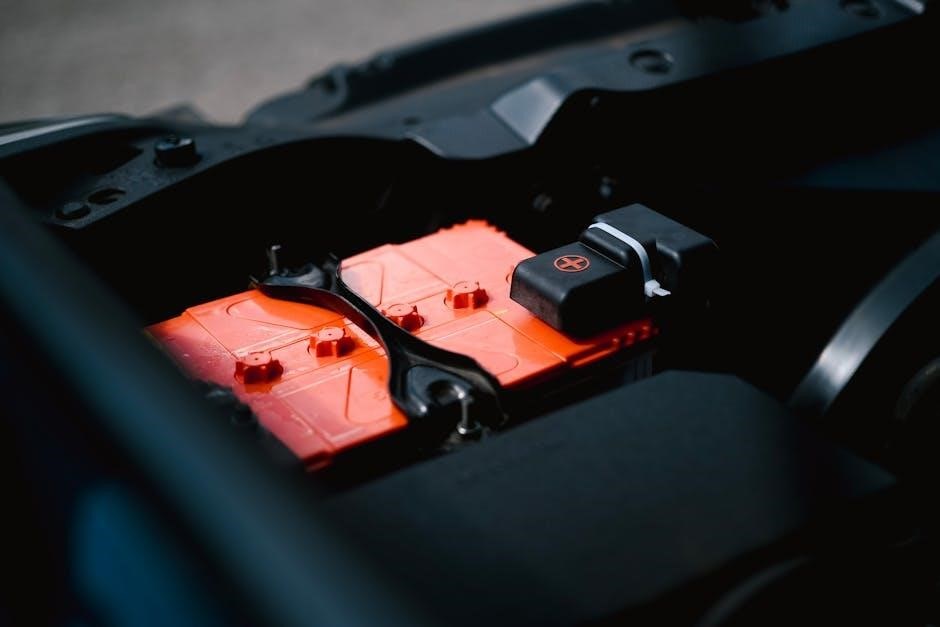
Jump Starting a Vehicle
This section details the safe and effective process of jump-starting a vehicle using your Avapow jump starter‚ ensuring a quick and reliable boost when needed.
Step-by-Step Jump Starting Process
Begin by ensuring both vehicles are turned off. Connect the red clamp to the positive (+) terminal of the dead battery‚ then the black clamp to a grounded metal surface on the disabled vehicle – away from the battery.
Next‚ power on the Avapow jump starter and connect the corresponding red clamp to the positive (+) terminal of the working vehicle’s battery‚ followed by the black clamp to its negative (-) terminal.
Attempt to start the dead vehicle. If it starts‚ disconnect the clamps in the reverse order of connection: black from working vehicle‚ then red from working vehicle‚ then black from dead vehicle‚ and finally red from dead vehicle. If the vehicle doesn’t start after a few attempts‚ check the clamp connections and consult the troubleshooting section.
Connecting the Clamps – Positive and Negative
Correct clamp connection is crucial for a safe jump start. Always begin by attaching the red (positive) clamp to the positive (+) terminal of the dead battery. This terminal is usually marked with a plus sign or a red cover.
Next‚ connect the black (negative) clamp to a solid‚ unpainted metal surface on the disabled vehicle’s engine block – not directly to the negative (-) terminal of the dead battery. This minimizes spark risk.
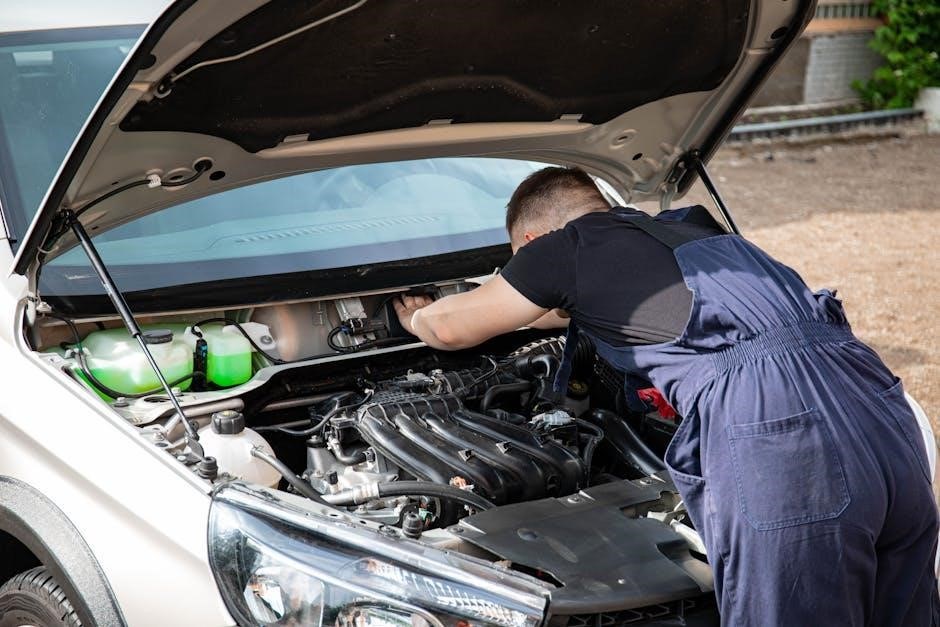
Ensure a firm grip with the clamps‚ avoiding any loose connections. Double-check polarity before proceeding; reversed polarity can cause severe damage. Once securely connected‚ proceed to power on the jump starter and attempt to start the vehicle.
Troubleshooting Jump Starting Issues
If the vehicle doesn’t start after connecting the Avapow jump starter‚ first ensure the clamps have a secure connection and correct polarity. A weak connection is a common culprit. If still failing‚ allow the jump starter to charge the dead battery for a few minutes before attempting to start again.
Check the battery terminals for corrosion; clean them if necessary. If repeated attempts fail‚ the dead battery may be severely damaged and unable to hold a charge. Some vehicles may require a longer charging period.
Consult your vehicle’s manual for specific jump-starting instructions. If error codes appear on the Avapow device‚ refer to the “Error Codes and Their Meanings” section for diagnosis.

Features and Functions
Avapow jump starters boast versatile features like a built-in LED flashlight and USB charging ports‚ enhancing usability beyond emergency jump-starts for convenient power solutions.
Built-in LED Flashlight
The integrated LED flashlight is a crucial safety feature‚ providing illumination during nighttime emergencies or when working in dimly lit engine compartments. This bright flashlight offers multiple modes – typically including a steady beam‚ a flashing mode for signaling‚ and potentially an SOS function for attracting attention.
Its convenient placement on the jump starter unit ensures it’s readily accessible when needed‚ eliminating the need to search for a separate light source. The flashlight’s powerful beam assists with visual inspection of the battery and connections‚ enhancing the jump-starting process. Beyond jump-starting‚ the flashlight serves as a handy tool for camping‚ power outages‚ or general outdoor activities‚ adding significant value to the Avapow jump starter.
USB Charging Ports – Functionality
Avapow jump starters often include USB ports‚ expanding their utility beyond vehicle jump-starting. These ports allow you to charge various portable devices‚ such as smartphones‚ tablets‚ and cameras‚ making the jump starter a versatile power source on the go. Typically‚ these are standard USB-A ports‚ and some models‚ like the T8 Max‚ may feature USB-C ports for faster charging capabilities.
The output current of the USB ports is generally sufficient for standard device charging‚ though it may not match the speed of a dedicated wall charger. Utilizing the USB ports is a convenient way to stay connected during emergencies or outdoor adventures‚ ensuring your essential devices remain powered. Remember to check the specifications of your devices to confirm compatibility with the jump starter’s USB output.
Multi-Functionality of the T8 Max
The Avapow T8 Max distinguishes itself through its expanded feature set‚ going beyond basic jump-starting capabilities. Beyond its powerful 6000A starting current‚ it incorporates a bright LED flashlight with SOS and strobe modes for emergency signaling. Crucially‚ the T8 Max boasts multiple USB charging ports – including USB-A and USB-C – enabling convenient charging of smartphones‚ tablets‚ and other devices.
Furthermore‚ some T8 Max models include features like a built-in compass and even tire pressure monitoring‚ enhancing its utility for roadside assistance and outdoor adventures. This multi-functionality transforms the T8 Max from a simple jump starter into a comprehensive emergency and power solution‚ offering significant value for vehicle owners and outdoor enthusiasts alike. It’s a truly versatile tool.

Maintenance and Storage
Proper maintenance ensures longevity. Store your Avapow in a cool‚ dry place‚ away from sunlight. Keep the device clean and free from liquids for optimal performance.
Proper Storage Conditions (Cool‚ Dry Place)
To maximize the lifespan and maintain the performance of your Avapow jump starter‚ adhering to proper storage guidelines is crucial. Avoid storing the device in environments exposed to extreme temperatures‚ whether hot or cold. High temperatures can degrade the internal battery components‚ reducing its capacity and overall effectiveness. Conversely‚ freezing temperatures can also negatively impact battery performance.
Humidity is another significant factor. A dry storage location is essential to prevent corrosion of the internal circuitry and external terminals. Never store the jump starter in damp basements‚ garages prone to moisture‚ or outdoors. Direct sunlight should also be avoided‚ as prolonged exposure can damage the casing and internal electronics. Ideally‚ store your Avapow in a climate-controlled indoor space‚ such as a closet or storage room‚ ensuring it remains cool and dry between uses.
Cleaning and Care Instructions
Maintaining your Avapow jump starter’s cleanliness is vital for its longevity and reliable operation. Regularly wipe down the exterior casing with a soft‚ dry cloth to remove dust‚ dirt‚ and grime. Avoid using abrasive cleaners‚ solvents‚ or excessive moisture‚ as these can damage the plastic housing and internal components.
Pay particular attention to the clamps‚ ensuring they are free from corrosion. After each use‚ inspect the clamps for any signs of rust or debris and clean them with a wire brush or a specialized contact cleaner if necessary. Ensure the clamps are completely dry before storing the unit. Do not immerse the jump starter in water or any other liquids. A slightly damp cloth can be used for stubborn marks‚ followed immediately by drying. Proper care ensures optimal performance and extends the life of your Avapow device.
Long-Term Storage Considerations
When storing your Avapow jump starter for extended periods‚ several precautions are essential to maintain its functionality. Before storage‚ ensure the unit is fully charged. Although regular charging every three months is recommended‚ a full charge beforehand optimizes battery health during inactivity. Store the jump starter in a cool‚ dry environment‚ away from direct sunlight and extreme temperatures – ideally between 32°F and 104°F (0°C and 40°C).
Avoid storing it in locations prone to humidity or condensation‚ such as garages or basements. Keep the device in its original packaging or a protective case to prevent physical damage. Periodically check the charge level‚ even during storage‚ and recharge as needed to prevent deep discharge‚ which can reduce battery lifespan. Following these guidelines will ensure your Avapow jump starter remains ready for use when you need it most.

Troubleshooting Common Problems
This section addresses frequent issues like power failures‚ vehicle recognition errors‚ and deciphering error codes‚ providing solutions for a smooth user experience.
Jump Starter Not Powering On
If your Avapow jump starter fails to power on‚ begin by verifying the charge level. Connect the device to a power source using the provided charging cable and allow it to charge for a sufficient duration – at least 30 minutes initially. Ensure the charging cable is securely connected to both the jump starter and the power outlet.
Next‚ inspect the power button for any physical damage or obstructions. Press and hold the power button firmly for several seconds to initiate the startup sequence. If the device still doesn’t respond‚ check the internal fuse (if applicable‚ consult the specific model’s diagram). A blown fuse will prevent the unit from powering on.
Finally‚ if none of these steps resolve the issue‚ there might be an internal malfunction requiring professional assistance or a replacement unit. Contact Avapow customer support for further guidance and potential warranty claims.
Jump Starter Not Recognizing a Vehicle
If your Avapow jump starter isn’t recognizing a vehicle‚ first ensure a solid connection between the clamps and the car battery terminals. Confirm the clamps are firmly attached to clean‚ corrosion-free metal surfaces. A poor connection is the most common cause of this issue.
Verify you’ve correctly connected the positive (red) clamp to the positive terminal and the negative (black) clamp to a grounded metal surface on the vehicle’s chassis‚ not directly to the negative battery terminal. Incorrect polarity will prevent the jump start process.
Also‚ check if the vehicle’s battery voltage is extremely low or if the battery is severely damaged. The jump starter may not be able to initiate a jump if the battery is beyond recovery. If problems persist‚ consult the Avapow support team for model-specific troubleshooting.
Error Codes and Their Meanings
Avapow jump starters utilize error codes to diagnose potential issues. A flashing red light‚ accompanied by a beep‚ often indicates a connection problem – check clamp placement and ensure a firm grip on the battery terminals. A solid red light may signify over-voltage or low-voltage protection is activated‚ suggesting a battery issue.
If the device displays a rapid flashing pattern‚ it could indicate internal overheating. Allow the unit to cool down before attempting another jump start. Some models display numerical error codes on a screen; consult the specific model’s detailed manual for a comprehensive list and their corresponding solutions.
Always refer to your Avapow jump starter’s specific manual for a complete decoding of error messages‚ as codes can vary between models. Ignoring error codes can lead to further damage or unsafe operation.